

Explanation
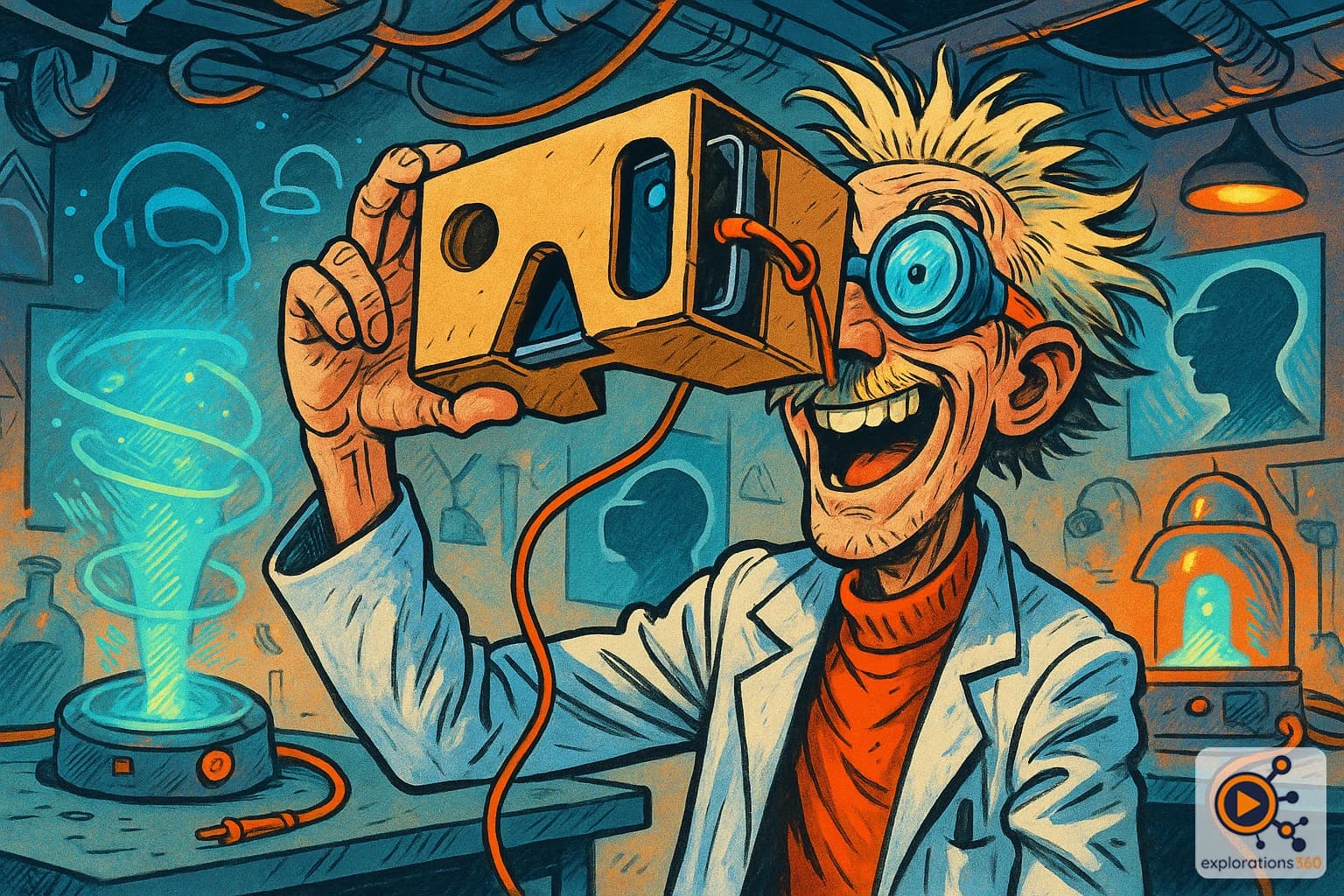
The Cardboard is an ultra-simple and affordable VR viewing device, popularized by Google in 2014. It consists of a cardboard holder with two lenses into which you insert a smartphone. The phone's screen displays a stereoscopic image and its gyroscope tracks head movements, providing a basic but universally accessible 360° experience.
Real-world example
Handing out branded Cardboard viewers at a real estate trade show so every visitor can view virtual apartment tours on their own phone.
Practical applications
- Distributing custom-branded Cardboard viewers at events for 360° tour discovery
- Equipping an entire classroom with Cardboard for a low-cost virtual field trip
- Providing a first VR experience to a broad audience with no hardware investment
- Using as a sales demonstration tool to showcase 360° panoramas to prospects
Cardboard: advantages and limitations
Advantages
- Minimal cost: a few dollars per unit, customizable with a logo
- Accessible: works with any recent smartphone
- Distributable: ideal for events, trade shows, or marketing campaigns
- Discovery: perfect gateway to VR for the general public
Example: A tourism office distributes 500 branded Cardboard viewers at a trade show to promote their virtual tours
Limitations
- 3DOF only: no positional tracking, orientation only
- Limited comfort: no head strap, must be held by hand
- Basic optical quality: simple lenses, reduced field of view
- No interaction: navigation limited to gaze or a magnetic button
Example: For interactive immersive training, a standalone headset like the Meta Quest is far more suitable than a Cardboard
VR scenario
A property developer launches a new housing project. They commission 360° virtual tours of the future apartments and distribute 1,000 custom-branded Cardboard viewers at the real estate trade show. Each visitor scans a QR code, inserts their phone into the Cardboard, and is immersed in the show apartment. Cost per contact: less than $3.
Why it matters in professional VR
- Cardboard played a historic role in democratizing VR for the general public
- Still relevant as a low-cost discovery and event marketing tool
- Not to be confused with standalone VR headsets: Cardboard is a passive viewer, not an interaction tool
- Format in decline as standalone headsets become increasingly affordable