

Explanation
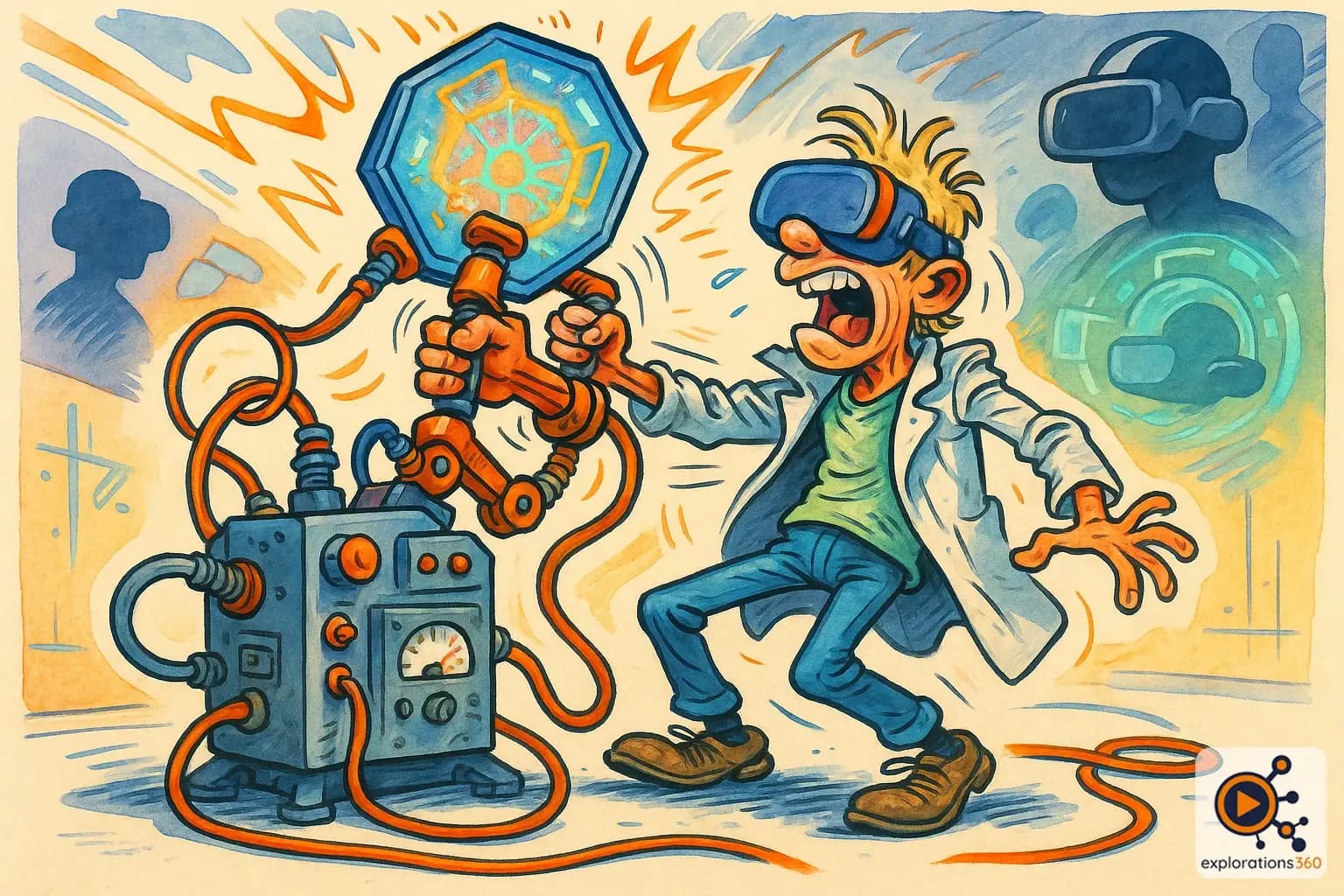
Physical force transmitted to the user to simulate the solidity and resistance of virtual objects. Unlike simple vibration-based haptics, force feedback physically prevents or resists the user's movement, creating a convincing sensation of weight, stiffness, and material properties.
Real-world example
Feeling resistance when you try to "push" a very heavy virtual wall.
Practical applications
- Weight simulation: feeling that a virtual object is heavy or light
- Material resistance: perceiving the hardness or elasticity of a surface
- Stops and limits: being unable to pass through a virtual obstacle
- Gestural precision: adjusting your force as you would with a real tool
Force feedback technologies
Hand/arm exoskeletons
- Mechanical structure that blocks or resists movement
- Realistic sensation of grasping and weight
- Heavy and expensive equipment
Example: HaptX gloves, arm exoskeletons for surgery
Cable/tendon devices
- Wires that pull on the fingers
- Lighter than exoskeletons
- Resistance-to-movement sensation
Example: SenseGlove gloves
VR scenario
A surgeon trains for a biopsy in VR with force feedback. As the virtual needle penetrates different tissue layers, they feel the resistance vary exactly as it would in a real patient. This tactile memory is crucial for the medical procedure.
Why it matters in professional VR
- Force feedback is the holy grail of haptics: making the virtual feel "solid"
- Essential for training where the sensation of force is part of the professional gesture
- Still an expensive technology, but advancing rapidly