

Explanation
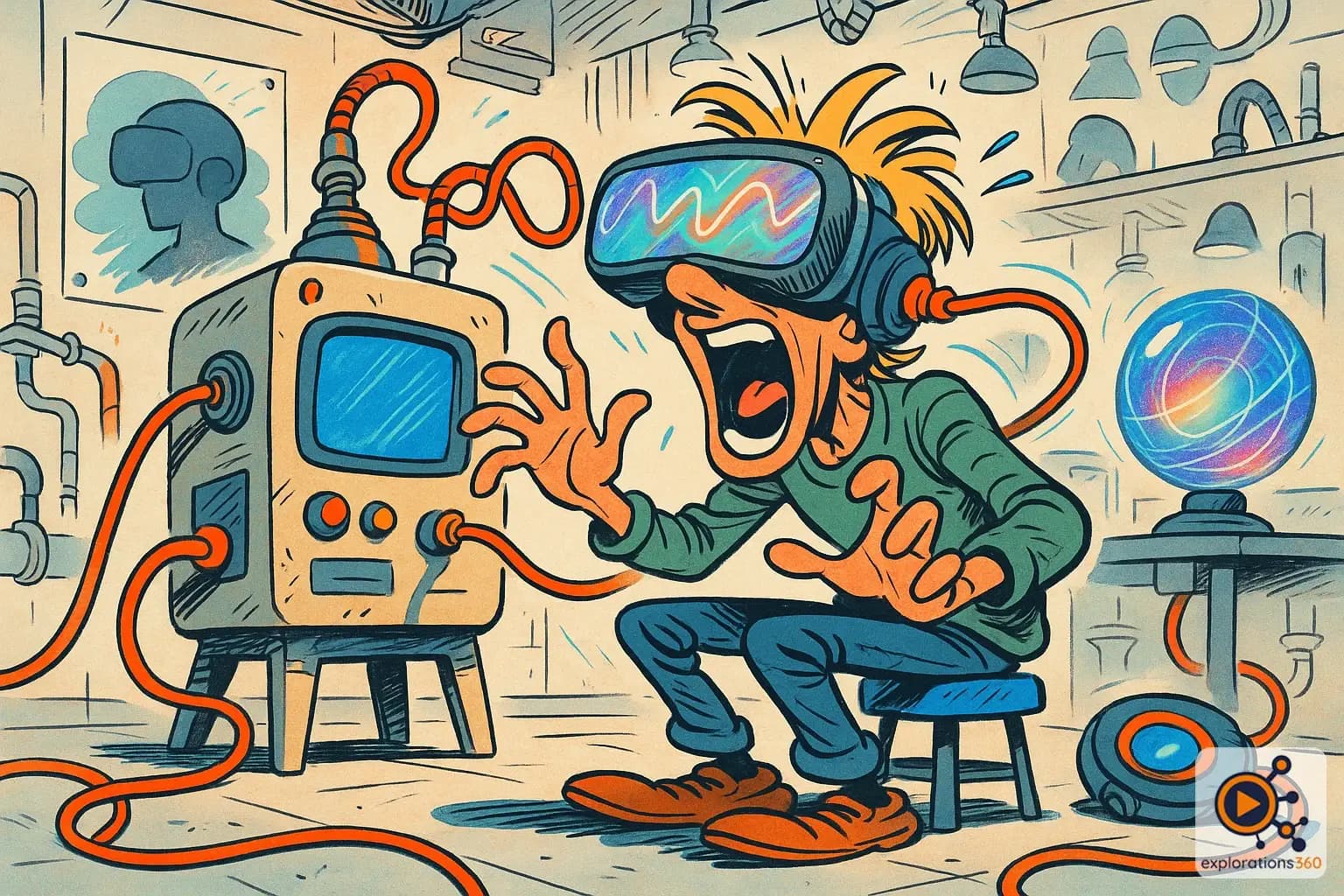
Immersion is the degree to which a user feels enveloped by and present within a virtual or augmented environment. It combines sensory stimulation (visual, auditory, haptic) with cognitive engagement to create the feeling of "being there."
Real-world example
Putting on a VR headset with noise-canceling headphones and finding yourself on a virtual mountaintop — for a moment, your brain "forgets" the real world. That feeling is immersion.
Practical applications
- VR training: immersion enables experiential learning where learners practice by doing, not watching
- Therapy: immersive environments help patients manage pain, anxiety, and phobias
- Architecture: immersive walkthroughs let clients experience a building before it exists
- Entertainment: immersive storytelling creates emotional impact that flat screens cannot match
Levels of immersion
Sensory immersion
- Stimulating sight, sound, and touch simultaneously
- Wide FOV, spatial audio, and haptic feedback
- Hardware-driven: depends on headset quality
- The foundation — without it, other levels struggle
Example: A VR headset with 110° FOV, spatial audio, and vibrating controllers creates strong sensory immersion
Cognitive immersion
- Mental engagement through narrative, challenge, or curiosity
- Content-driven: depends on scenario quality
- Can be strong even with modest hardware
- What makes users "forget" they're in VR
Example: A VR escape room with clever puzzles creates deep cognitive immersion even on a basic headset
VR scenario
In a VR fire safety training, the combination of realistic flames (visual), crackling sounds (audio), heat simulation (haptic vest), and the urgency of the scenario (cognitive) creates an immersive experience that trainees remember and apply — far more effectively than a classroom presentation.
Why it matters in professional VR
- Immersion is the core value proposition of VR — it's what makes the technology transformative
- High immersion dramatically improves learning retention, emotional impact, and behavioral change
- Designing for immersion means balancing sensory quality, narrative, and interaction — not just resolution