

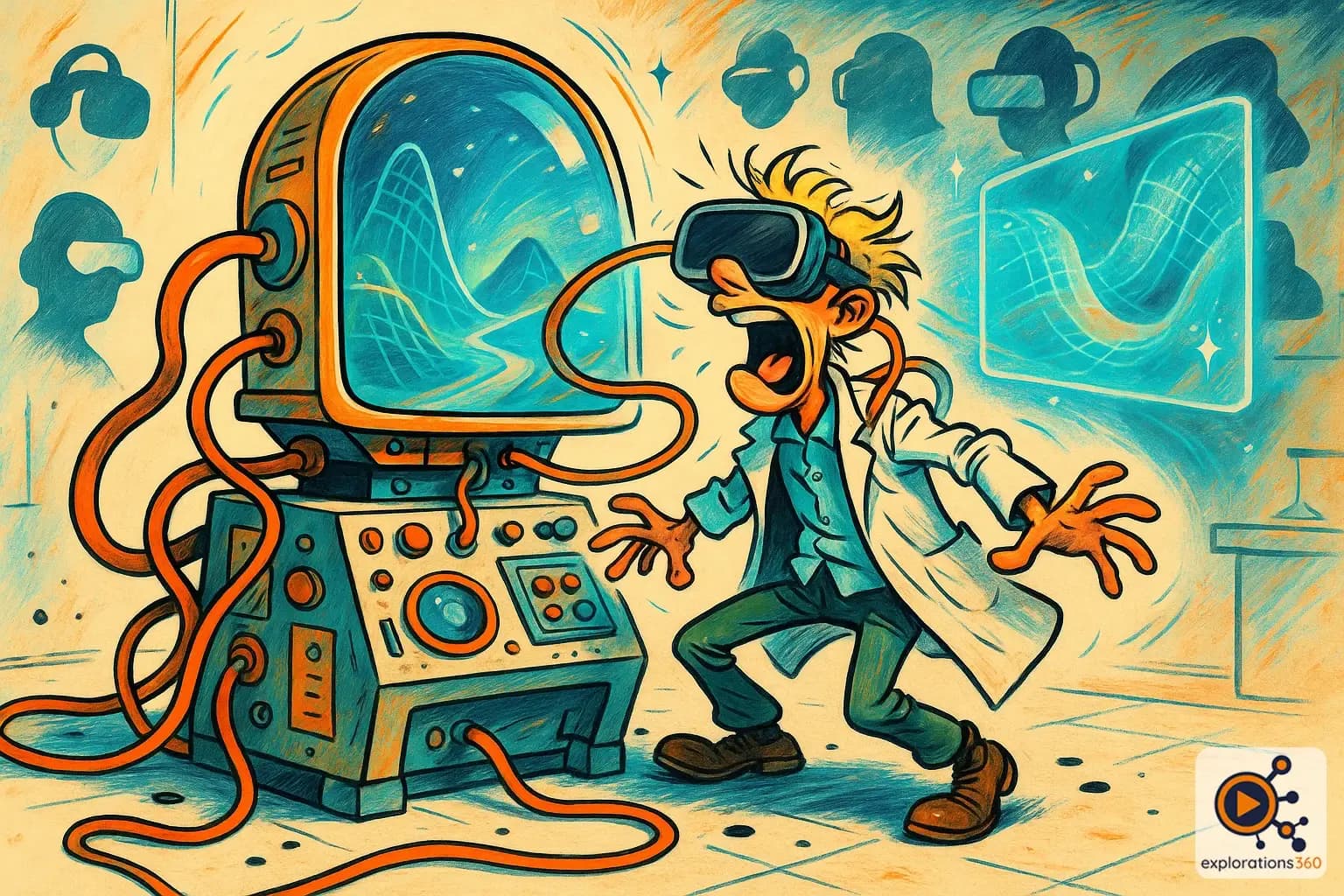
Explanation
The set of technologies that create immersive experiences.
Real-world example
VR, AR, IMAX domes, flight simulators — everything that "transports" you somewhere else.
Practical applications
- Training: learning through simulated practice
- Design: visualizing and testing before building
- Therapy: treating phobias and PTSD through controlled exposure
- Entertainment: experiences impossible in the real world
Spectrum of immersive technologies
Visual immersion
- VR headsets (full immersion)
- AR/MR glasses (overlay on the real world)
- Large screens / CAVEs (shared immersion)
- Domes and planetariums
Example: A Meta Quest headset for individual immersion
Auditory immersion
- Spatial 3D audio (HRTF, ambisonics)
- Multichannel systems (5.1, Atmos)
- Bone conduction headphones
- Active noise cancellation
Example: Spatial headphones that place sounds all around you
Haptic and physical immersion
- Force-feedback gloves and suits
- Motion platforms
- Omnidirectional treadmills
- Thermal and tactile stimulation
Example: A bHaptics suit that lets you feel impacts
VR scenario
A company trains its technicians on turbine maintenance. It uses a combination of immersive technologies: VR headsets for visualization, haptic gloves to feel the components, spatial audio for alerts, and a platform that vibrates like a real running turbine. Multisensory immersion ensures optimal transfer to real-world situations.
Why it matters in professional VR
- Convergence: it is the combination of technologies that creates total immersion
- Measurable ROI: immersive training shows proven gains
- Growing market: massive investments from all major tech companies
- Democratization: technologies once reserved for military/industry are becoming consumer-grade