

Explanation
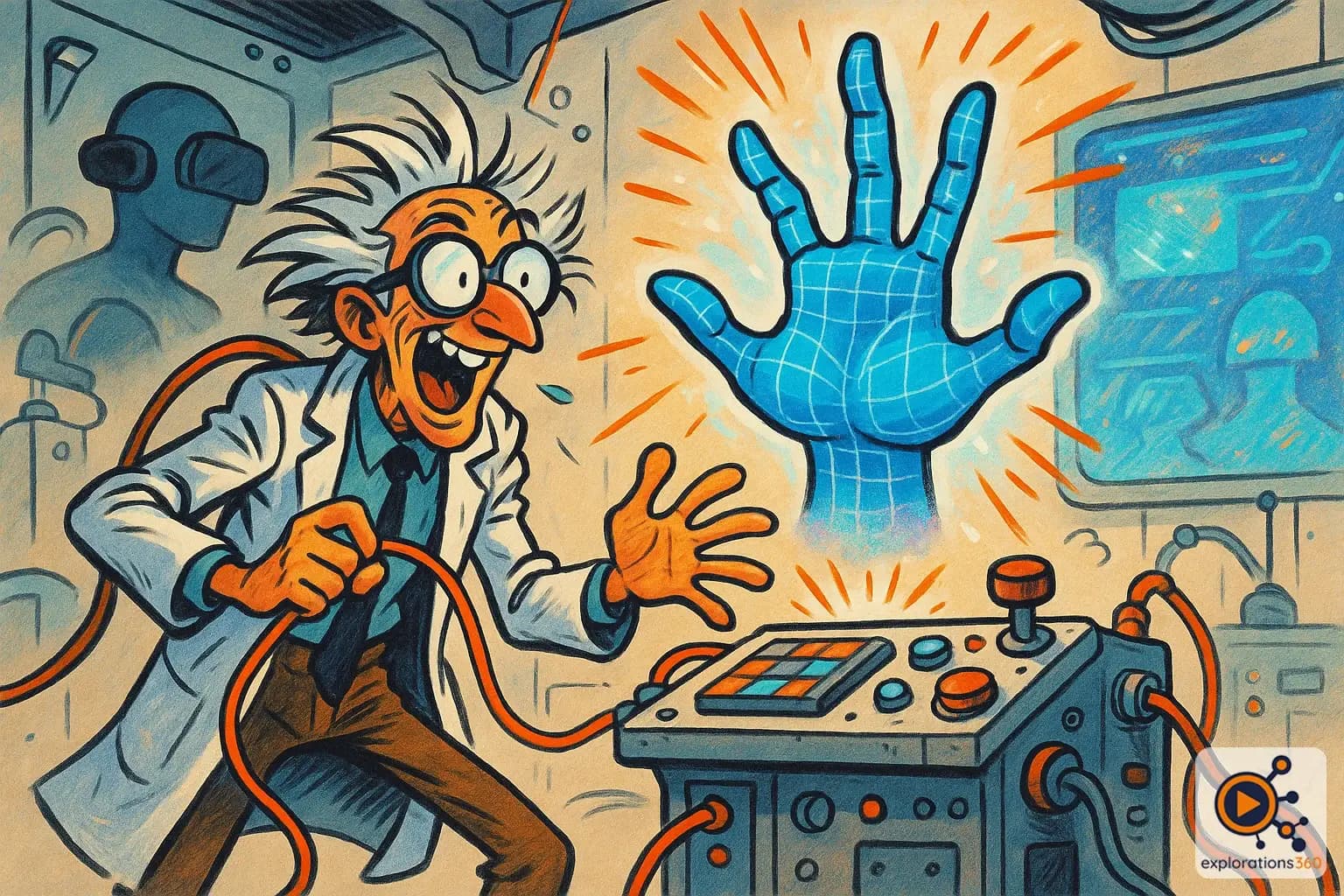
A 3D hand model that reproduces the user's real movements inside the virtual environment. Virtual hands are a critical element of VR presence and interaction: seeing your own hands move naturally in the virtual world reinforces embodiment, enables direct manipulation (grab, point, gesture), and supports both controller-based and camera-based hand tracking.
Real-world example
Seeing your hands move in Beat Saber as you hold the virtual lightsabers.
Practical applications
- Embodiment: seeing your own hands strengthens the sense of presence
- Direct interaction: grabbing, pointing, and manipulating without intermediaries
- Social communication: expressive gestures in social VR
- Training: learning technical gestures by watching your own hand movements
Types of hand representation
Controller-based hands
- Position derived from held controllers
- Fingers animated via capacitive sensors or buttons
- Stylized representation (glove, robot)
- Reliable but less natural
Example: Valve Index Controllers with capacitive finger tracking
Camera-based hands (hand tracking)
- Optical tracking without holding anything
- All fingers tracked individually
- Natural gestures (pinch, poke, palm)
- Can be occluded or lose tracking
Example: Hand tracking for menus and UI navigation
Realistic vs stylized
- Photorealistic: maximizes presence and self-identification
- Stylized: avoids the uncanny valley, lighter to render
- Customizable: avatar style, gloves, skin tone
- Context-dependent: cartoon for children, realistic for professional training
Example: Horizon Worlds with cartoon hands vs a surgical simulator with photorealistic hands
VR scenario
In a VR assembly training session, the operator sees their virtual hands reproduce their real gestures exactly. When they grip a part incorrectly, their virtual hand turns red. When the gesture is correct, the virtual fingers glow green. This visual correspondence between real and virtual hands creates an intuitive and effective learning loop.
Why it matters in professional VR
- Presence: seeing your hands is crucial to feeling like you "are" in the virtual world
- Proprioception: coherence between felt position and visible hand position
- Expression: hands convey a tremendous amount of non-verbal information
- Learning: muscle memory forms more effectively when you can see your own gestures