

Explanation
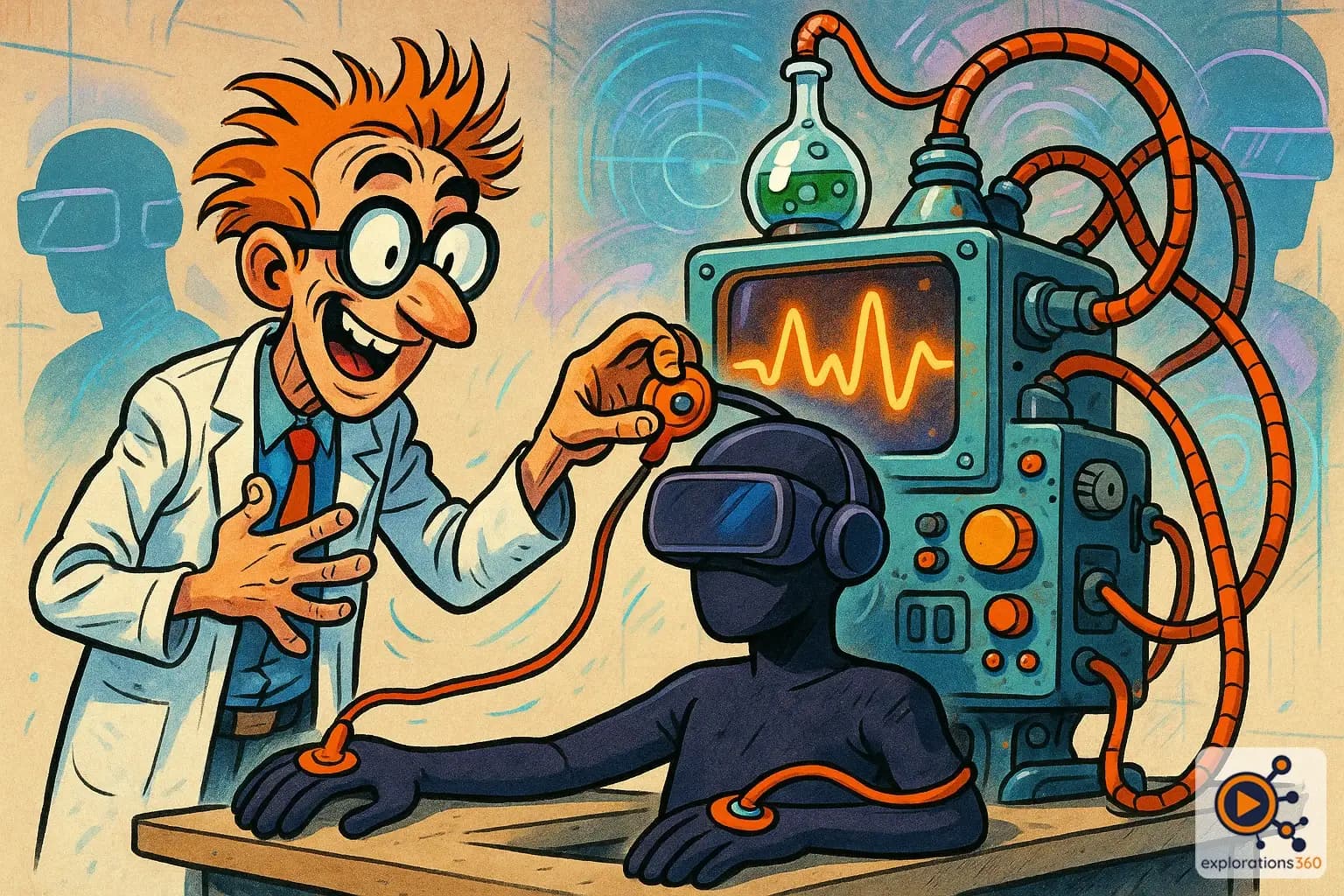
A device that measures biological parameters such as heart rate, skin conductance, or brain activity to provide objective data about the user's physiological state.
Real-world example
A smartwatch monitoring your stress levels during a VR experience by tracking heart rate variability.
Practical applications
- Stress measurement: detecting anxiety via heart rate or skin conductance
- Engagement assessment: attention level, cognitive fatigue
- Real-time adaptation: adjusting the experience based on physiological state
- Research and analytics: objective data on user reactions and emotional responses
Types of biosensors in XR
Cardiac sensors
- Heart rate, heart rate variability (HRV)
- Indicator of stress and engagement
- Can be integrated into wristbands or headsets
Example: Measuring a pilot's stress during a flight simulation training
Electrodermal sensors (EDA/GSR)
- Skin conductance (perspiration)
- Instantaneous emotional response
- Highly sensitive to emotional spikes
Example: Detecting fear during a crisis management scenario
Eye tracking + pupillometry
- Pupil dilation = cognitive load
- Built into some high-end VR headsets
- Rich data on user attention
Example: Analyzing engagement levels during a training session
VR scenario
During a crisis management training in VR, biosensors measure the manager's stress levels. The trainer can see in real time when the trainee "cracks" under pressure. This objective data complements the subjective performance evaluation.
Why it matters in professional VR
- Biosensors provide objective data about the lived experience
- A key differentiator for soft skills training: measuring stress, not just performance
- Convergence of VR and quantified self: the ultimate personalization of immersive experiences