

Explanation
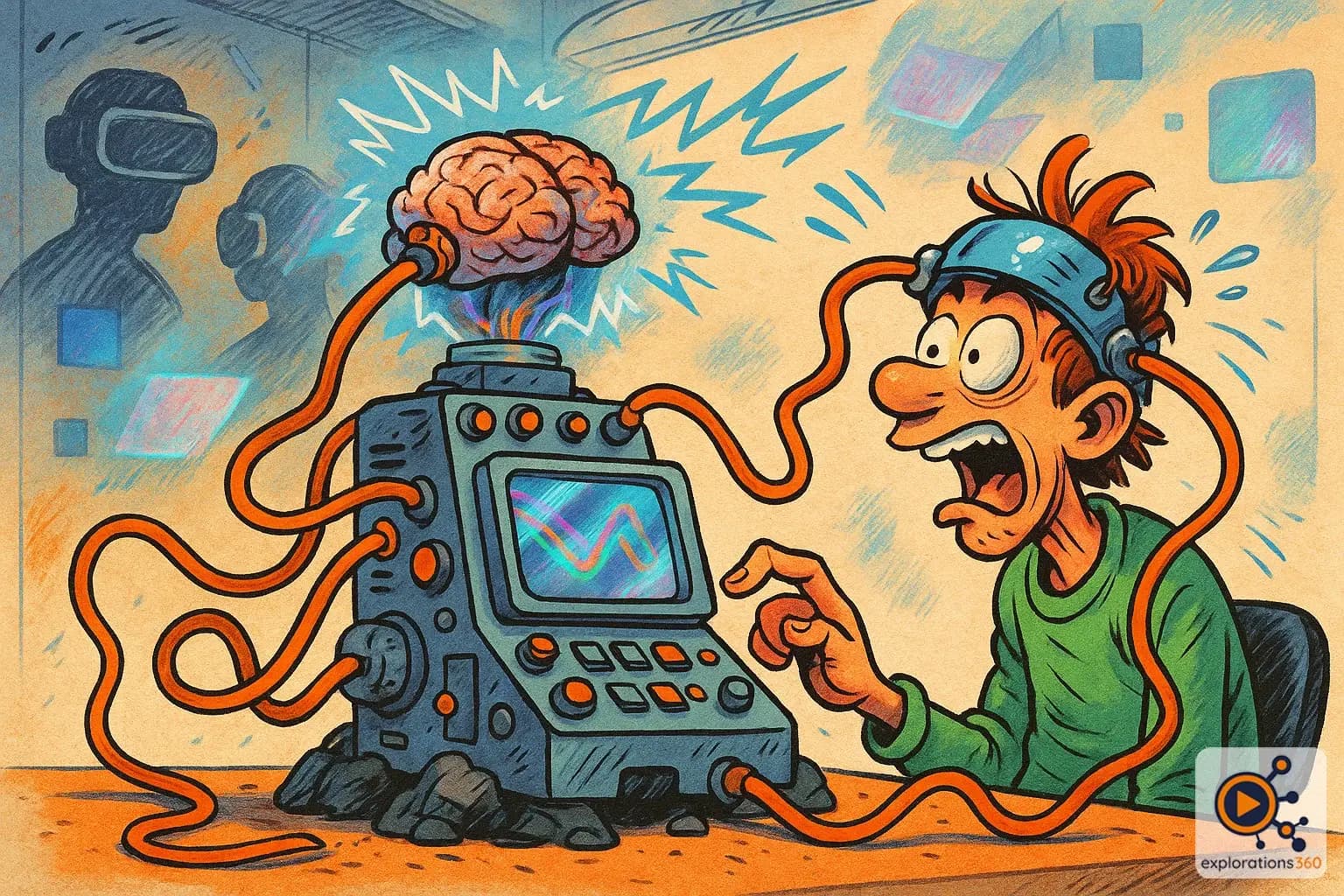
A futuristic technology that enables direct control of computers and virtual environments through brain activity. Neural interfaces read electrical signals from the brain and translate them into commands, potentially allowing users to interact with VR without any physical movement.
Real-world example
Neuralink's experiments enabling a person to control a computer cursor using thought alone.
Practical applications
- Thought control: triggering actions without any physical movement
- Accessibility: enabling VR for paralyzed individuals
- Mental state detection: adapting the experience based on attention and emotion levels
- Neural feedback: directly stimulating sensations
Types of neural interfaces
Non-invasive (external)
- EEG (electroencephalogram): electrode headband
- EMG: muscle signal detection
- fNIRS: infrared brain imaging
- Available today but with limited precision
Example: Emotiv or Muse headsets for meditation and attention monitoring
Invasive (implants)
- Electrodes implanted in the cortex
- Much higher precision
- Surgical and ethical risks
- Neuralink, Blackrock Neurotech
Example: A quadriplegic patient controlling a cursor through thought
Bidirectional
- Both reading AND writing neural signals
- Directly stimulating sensations
- Highly experimental
- Promise of "virtual touch" without gloves
Example: Cochlear implant: a neural interface for hearing
VR scenario
In a hypothetical near future, a user wears an EEG headband with their VR headset. When they intensely think "move forward," their avatar advances. Their concentration level is detected: if attention drops, the experience pauses or simplifies the scene. No more tired hands, no more motion sickness from physical movement -- control is purely mental.
Why it matters in professional VR
- Radical accessibility: VR for everyone, regardless of motor abilities
- Bandwidth: potentially more information than physical gestures
- Ultimate immersion: intuitive "thought-based" control
- Ethics: major questions about cognitive privacy