

Explanation
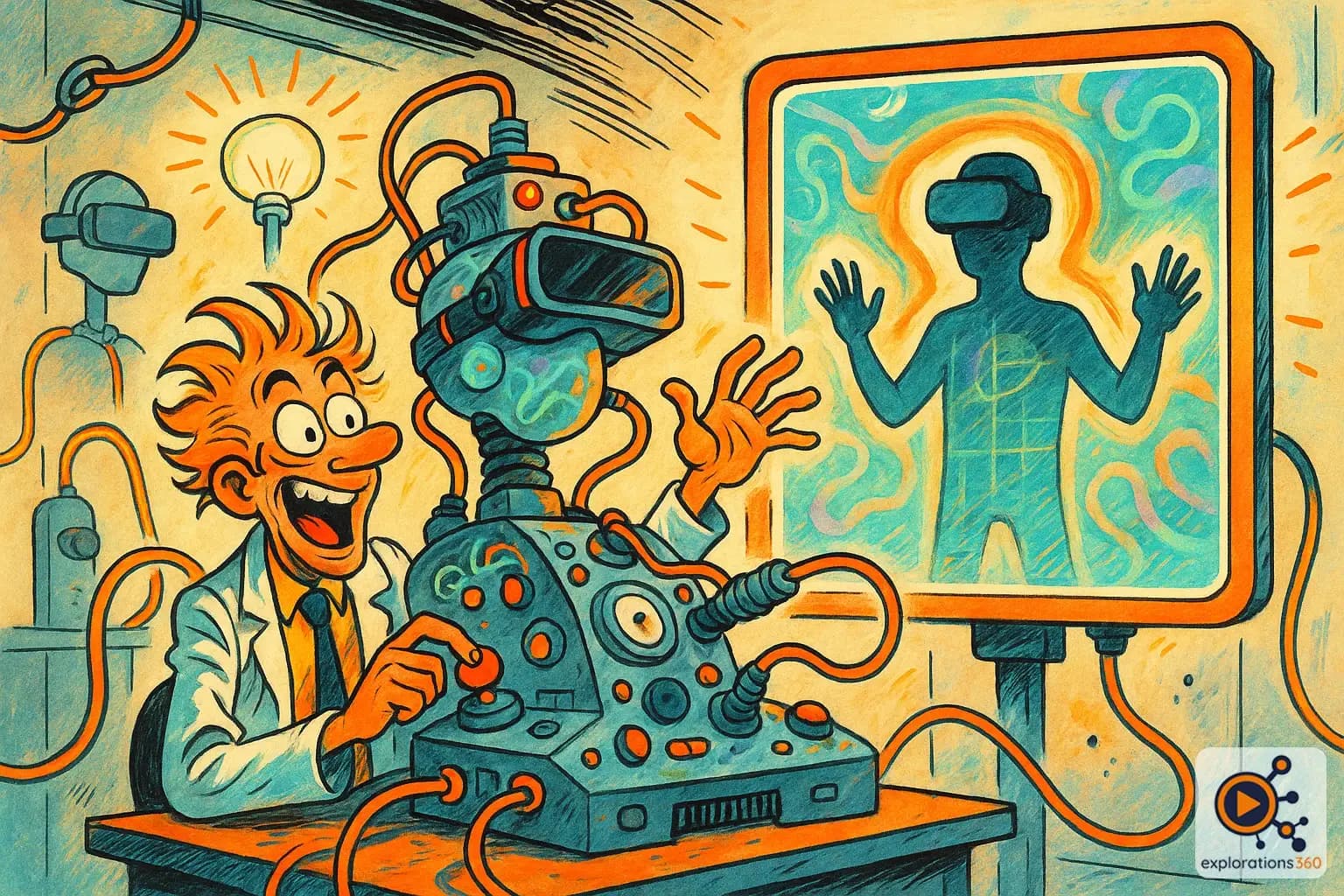
The psychological impression of actually being inside the virtual environment, rather than simply viewing it on a screen. Presence occurs when the brain accepts the virtual world as real, triggering genuine emotional and physiological responses.
Real-world example
Instinctively feeling fear of heights when looking down from a virtual skyscraper.
Practical applications
- Physiological reactions: vertigo at the edge of a virtual cliff, flinching from a virtual threat
- Spatial memory: remembering VR locations as if they were real places
- Amplified empathy: genuinely feeling the situations experienced through an avatar
- Learning transfer: skills acquired in VR carry over to the real world
Presence vs Immersion
Immersion (technical)
- What the technology PROVIDES
- Quality of sensors, displays, audio
- Objectively measurable (resolution, latency...)
Example: A 4K headset at 120 Hz with spatial audio
Presence (psychological)
- What the user FEELS
- Subjective response to immersion
- Varies between individuals and contexts
Example: Two people with the same headset may experience different levels of presence
VR scenario
During a fire safety training session, a trainee firefighter feels a genuine surge of adrenaline when facing virtual flames. Their body reacts as it would in a real fire (elevated heart rate, sweating). This is presence: the brain "believes" the situation is real.
Why it matters in professional VR
- Presence is the holy grail of VR: it is what makes the experience truly transformative
- Without presence, VR is just a fancy screen -- with presence, it becomes a tool for behavioral change
- The most effective VR training programs are those that generate a strong sense of presence