

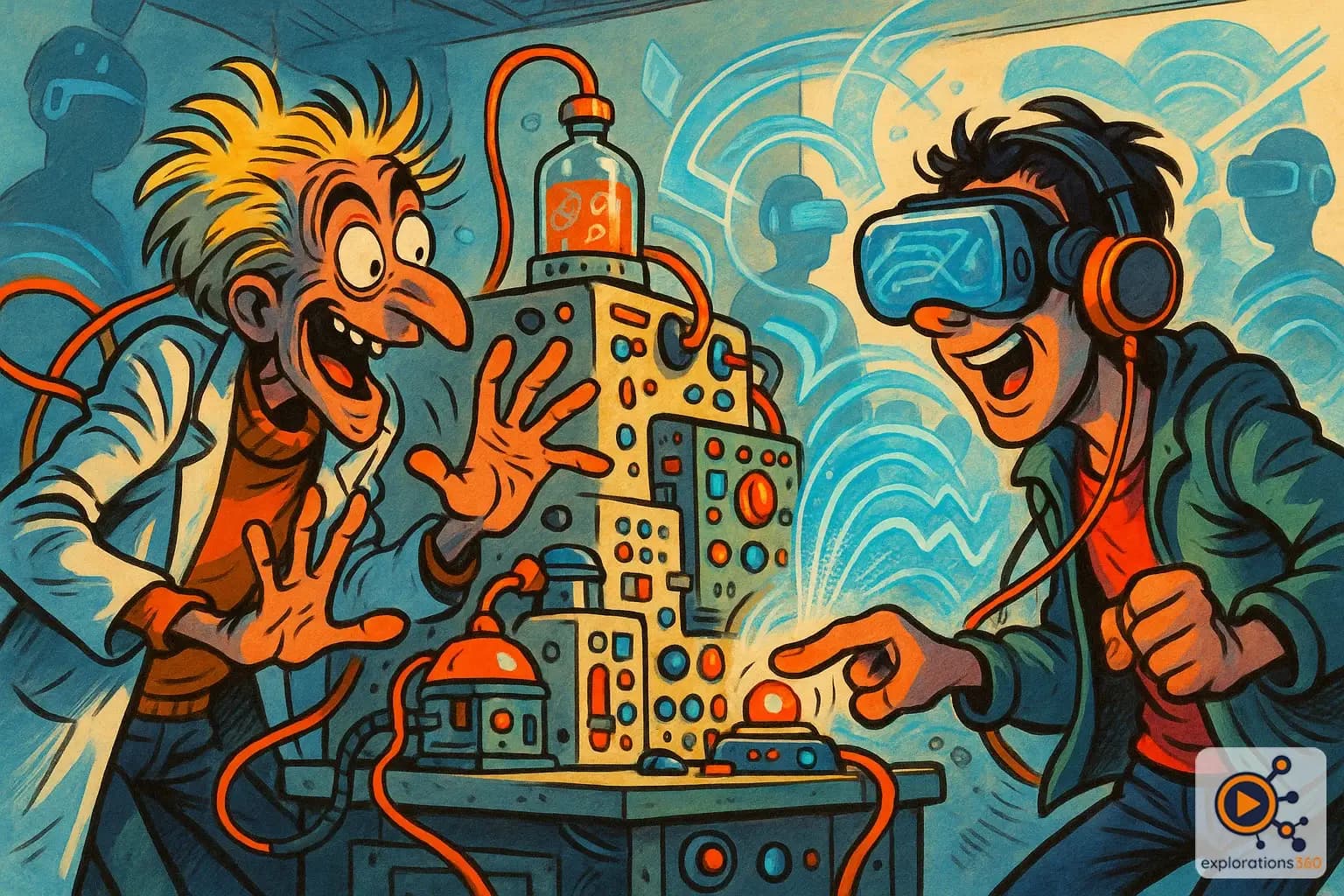
Explanation
Immediate communication with no perceptible delay between action and reaction.
Real-world example
Moving your hand and seeing your virtual hand move in the same way at the same instant.
Practical applications
- Control responsiveness: every gesture is translated instantly on screen
- Immediate feedback: visible consequences of user actions without delay
- Synchronous collaboration: multiple users interacting together without lag
- Faithful simulations: physics and behaviors computed at every frame
Real-time vs pre-computed
Real-time (interactive)
- Computations performed instantly during use
- The user can influence what happens
- Requires immediate processing power
Example: A VR game where you control the actions
Pre-computed (non-interactive)
- Content generated in advance
- Higher visual quality but cannot be altered by the user
- Films, 360° videos
Example: 360° video of a tour: you watch but do not act
VR scenario
In a VR training module, the technician manipulates a virtual valve. In real time, the system calculates flow rate, pressure, and displays the consequences of their action immediately. They see the result of each gesture without any delay — that is real-time interaction.
Why it matters in professional VR
- Real-time is what makes a VR experience interactive rather than passive
- Demanding technical requirement: everything must be computed in under 11 ms (at 90 Hz)
- A key differentiator between interactive VR training and passive 360° video