From the fixed frame to 360° space: a paradigm shift
Since the invention of cinema, telling a story has meant controlling a frame. The director chooses what you see, when you see it, and in what order. The viewer sits in front of a screen - passive, guided, channeled.
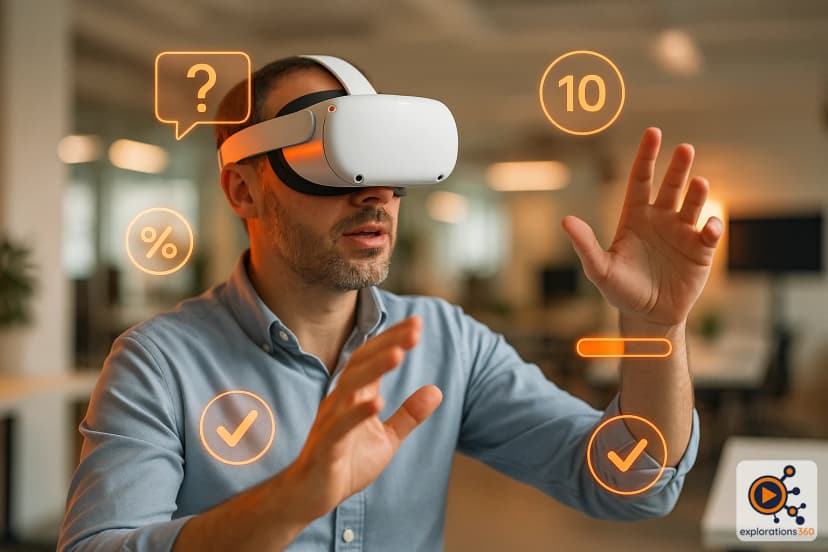
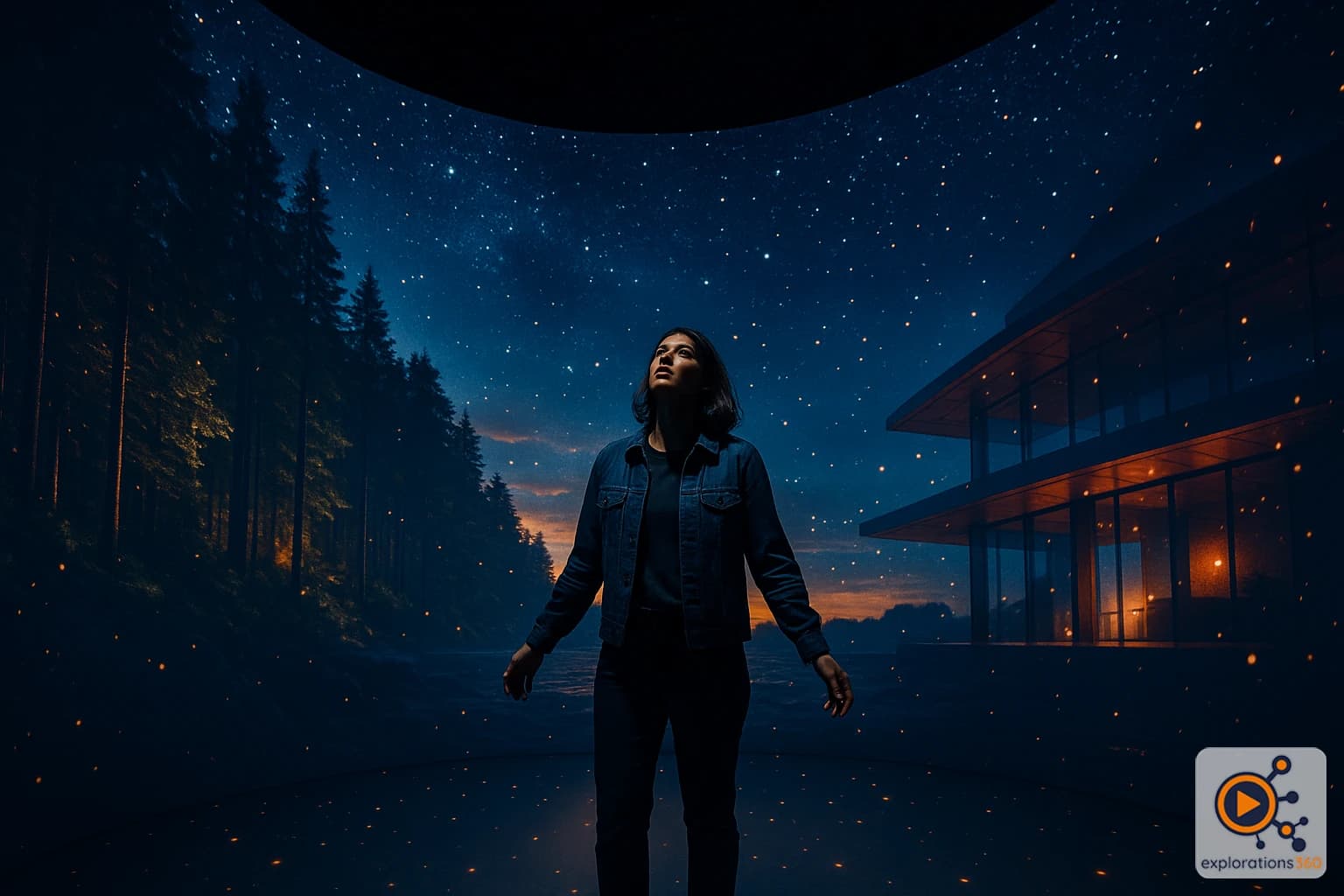
With spatial storytelling, this paradigm shatters. The viewer is no longer in front of the story: they are inside it. Their gaze freely explores a 360° environment, and it is this exploration that drives the narrative forward. The director no longer controls the frame - they design a narrative space in which every direction, every interaction, every sound contributes to the story.
This shift is as radical as the transition from theater to cinema. In theater, the audience sees the entire stage at once. Cinema introduced editing and framing to direct the gaze. Spatial storytelling gives the viewer back the freedom to look wherever they want - but within an environment designed to guide without constraining.
At explorations360, we have been exploring this way of storytelling since the very beginning. Philippe discovered virtual worlds in 1997 with Le Deuxième Monde by Canal+, the first European metaverse. Roland has been designing immersive applications since 2000 - simulators, serious games, interactive training. Together, they bring over 50 years of expertise in creating experiences where space tells the story as much as words do.
Theoretical roots: from the humanities to video games
Spatial storytelling did not emerge from a marketing pitch. It is rooted in decades of reflection on the relationship between space and narrative, from philosophy to digital pioneers.
Space as narrative material
The idea that space structures narrative is not new. Gaston Bachelard (The Poetics of Space) showed that places shape our imagination. Mikhail Bakhtin, with his concept of the chronotope (the narrative space-time), theorized the inseparable link between place and story. Thinkers such as Édouard Glissant and Edward Soja later expanded this reflection to the spatial dimension of culture and collective narrative, in what is known as the spatial turn in the humanities.
From text to screen: the pioneers of interactive narrative
In 1997, Janet Murray published Hamlet on the Holodeck, a foundational work that theorizes narrative in immersive digital environments. That same year, Celia Pearce explored the spatial design of narrative in the context of video games. In 2007, Henry Jenkins developed the concept of environmental storytelling: the idea that space itself tells the story, through objects, architecture, and clues placed within the setting.
Marie-Laure Ryan, a specialist in digital narratology, deepened this approach by working on cognitive maps and the construction of narrative space - how the reader/viewer builds a mental representation of the place to navigate through the story.
Spatial storytelling: a named concept
More recently, practitioner-researcher Nathalie Paquet proposed explicitly naming "spatial storytelling" (narration spatialisée) a form of narrative in which space is an intrinsic component, a pillar that structures and orients it. This is exactly what we practice daily at explorations360: designing experiences where space is not a backdrop, but the engine of the story.
The three pillars of spatial storytelling
Creating an immersive experience is not just about filming in 360°. Without spatial storytelling, 360° content remains a mere technical demonstration - impressive for the first few seconds, quickly forgotten afterward. Three pillars structure this discipline.
Spatial scripting
The scriptwriter thinks in spaces, not sequences. Hotspots become narrative milestones. The story is topographic: it is the viewer's curiosity that traces the path. Non-linear journeys, free exploration, visual cues.
Immersive sensory design
Spatial audio guides the gaze without constraining it. Visual transitions, multimedia hotspots, automated avatars as narrators. Each sensory layer anchors the message and creates emotional texture.
Adaptive narrative
The viewer becomes a co-author of their experience. Conditional logic (IF / OR / AND), integrated quizzes, VR escape games, gamified journeys. Each exploration is unique - the key to lasting memorization.
Spatial storytelling vs traditional narrative
To better understand what spatial storytelling changes, let's compare it to narrative as it has always been practiced - in cinema, advertising, and corporate communication.
| Criterion | Traditional narrative | Spatial storytelling |
|---|---|---|
| Viewer's position | In front of the screen | At the center of the scene |
| Gaze control | The director frames | The viewer explores |
| Narrative guidance | Editing, camera movements | Spatial audio, hotspots, visual cues |
| Interaction | Passive (watching) | Active (exploring, clicking, choosing) |
| Memorization | Visual and auditory | Spatial + visual + auditory |
| Emotional engagement | Empathy through identification | Presence - "I am there" |
Real-world applications by sector
Spatial storytelling is not a theoretical concept. For over 15 years, we have been applying it in the field across various sectors. Our scientific research articles (see academy) on the topic report:
Training and immersive learning
In training, spatial storytelling guides the learner through a pedagogical scenario where information is anchored in the environment. Instead of reading instructions on a flat screen, the learner discovers them in context - right where they will be useful in real life.
Field case - CFMA Cooperl: VR at the heart of industrial onboarding
The CFMA (Centre de Formation aux Métiers de l'Agroalimentaire), affiliated with the Cooperl group, welcomes hundreds of temporary workers each year. The challenge: training them quickly on safety procedures, with an often non-French-speaking workforce.
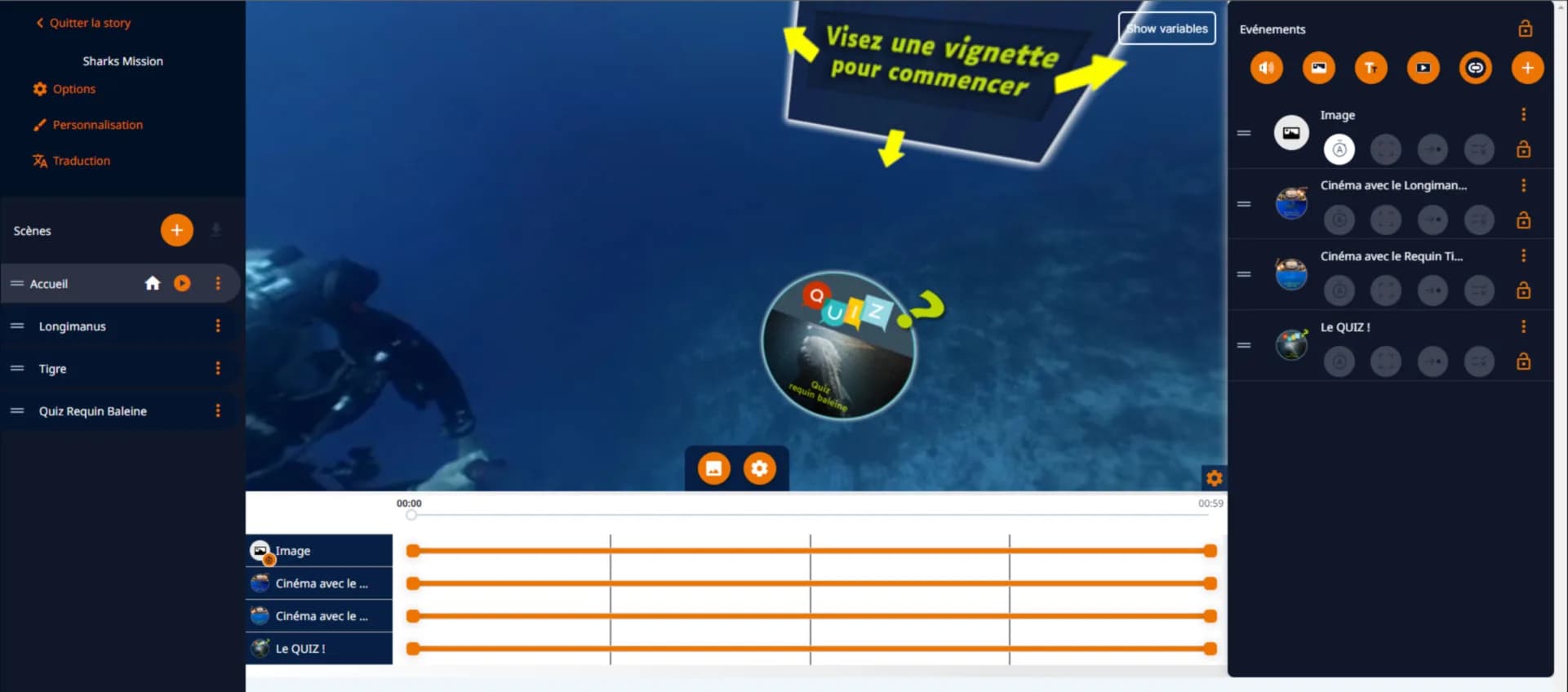
The solution: an immersive VR 360° journey created on easystory360, available in 9 languages, guiding each newcomer from the parking lot to their workstation. Result: training reduced to 1 hour.
This model is replicated in agricultural education with Formagro (immersive career pathways) and in industry with UIMM (immersive safety courses for new students, who discover virtual reality safety instructions for each tool in the metalworking workshop).
Communication and immersive marketing
Brand storytelling is a central element of corporate communication. Spatial storytelling takes this logic further: it doesn't just tell the company's story, it immerses the viewer in it.
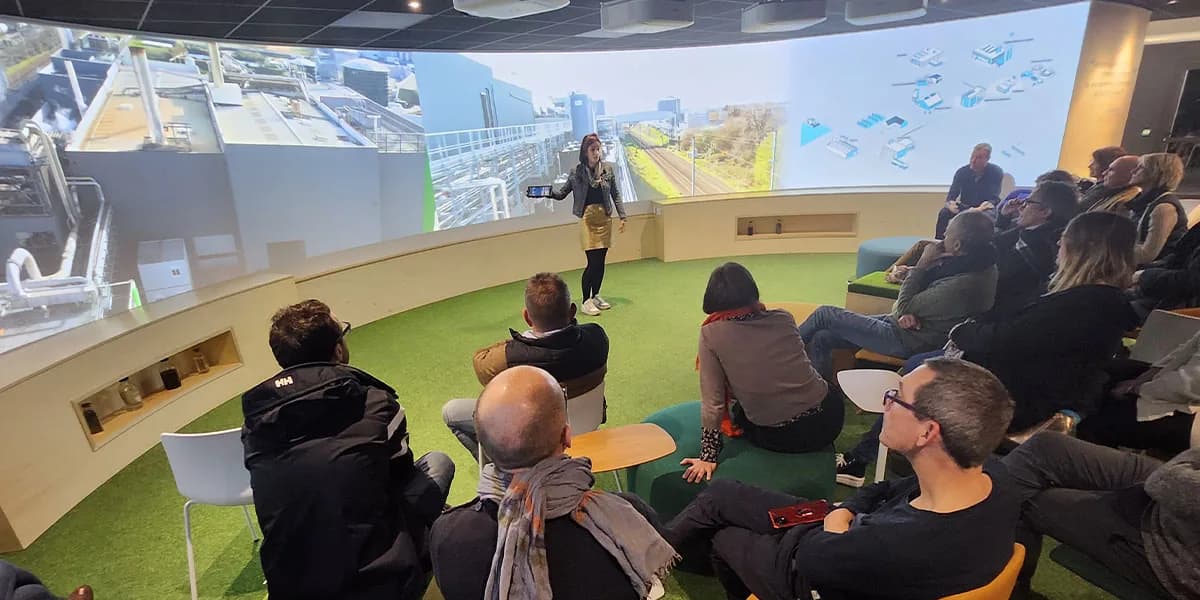
"You made my dream come true: you managed to translate exactly what we had in mind. I've never seen anything like it!"
This ability to translate a vision into an immersive experience is reflected in projects produced for SUEZ (educational journeys on the water cycle) and for Phyteis (raising awareness of responsible agricultural practices). In the cultural sector, ARTE pushes this logic with The Amusement, a narrative VR adventure that deliberately challenges the conventions of the medium - focusing on storytelling and staging rather than technical prowess.
"What had been agreed upon was delivered on time and on budget. Our client was amazed by the achievement. explorations360 in three words: innovative, responsive, effective."
Tourism and cultural heritage
In cultural tourism, spatial storytelling transforms a virtual tour into a true scripted journey. Instead of navigating between silent 360° photos, the visitor is guided by a story - with spatial audio, anecdotes that trigger as they pass by, and path choices.
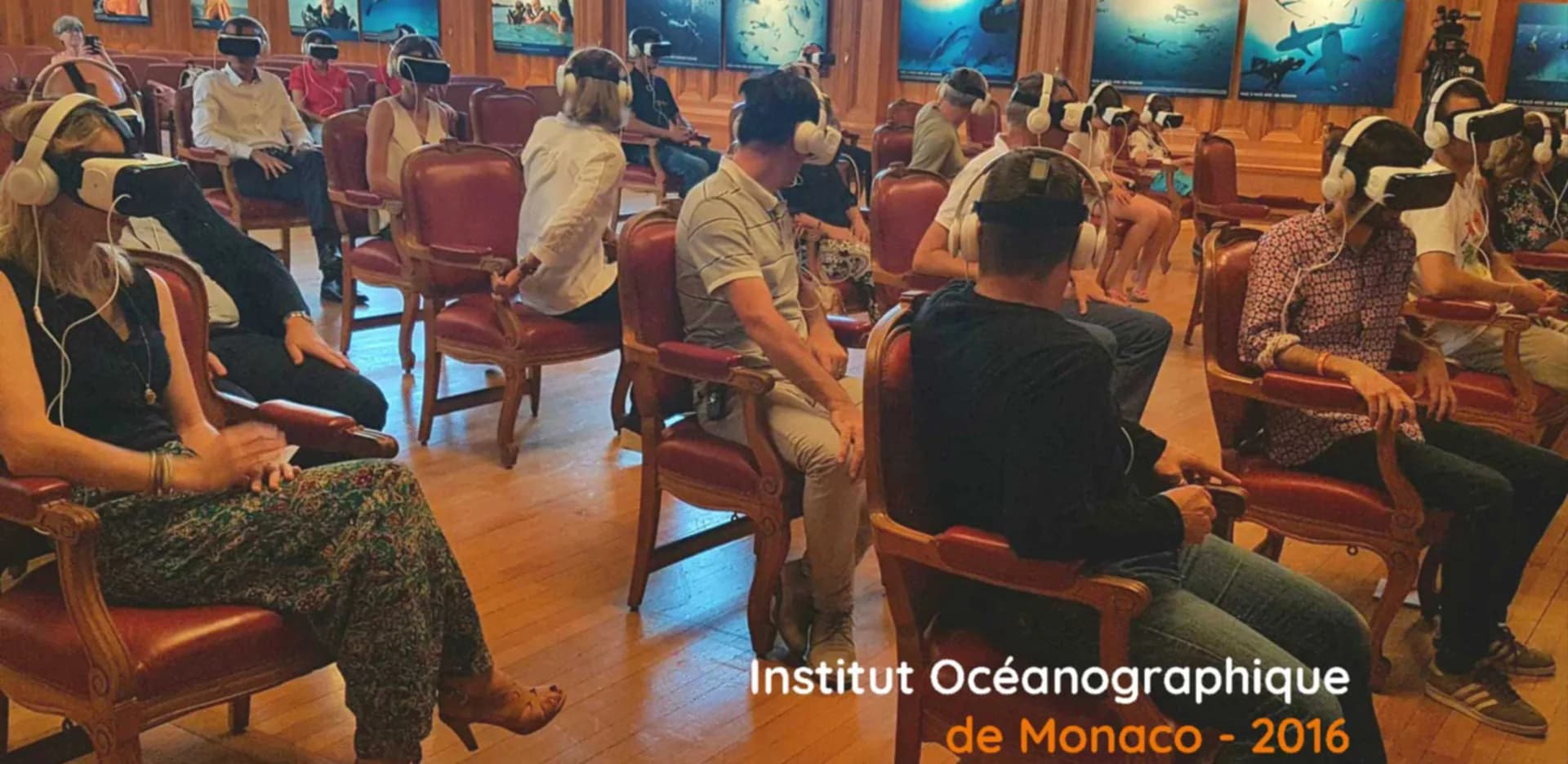
Aquarium of Monaco
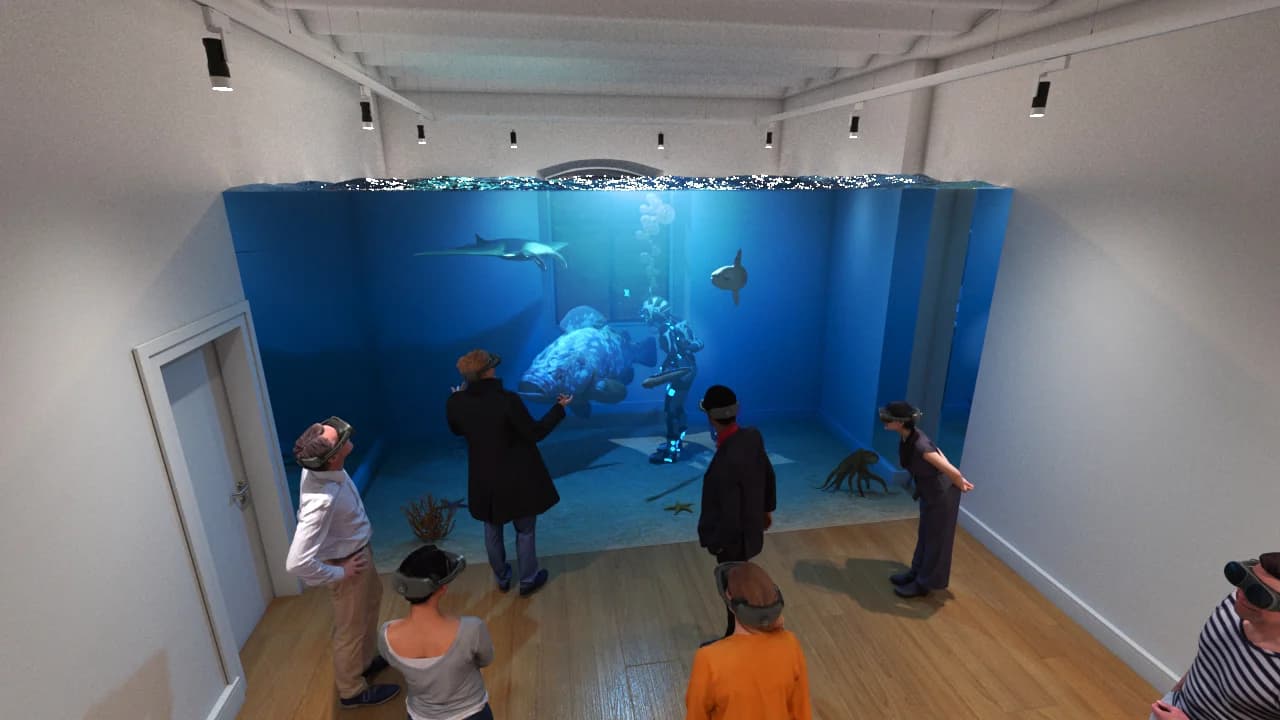
One of the first museums in the world to install a permanent VR room (35 headsets) in 2016. Visitors dive into the heart of the oceans through spatial storytelling.
Radôme de Pleumeur-Bodou
A 360° flyover of the Cité des Télécoms. The viewer is placed at the top of the historic antenna to relive the epic of space telecommunications.
"Doing without this tool today is no longer an option. Virtual reality allows us to take audiences into inaccessible ecosystems, without exclusion."
From Quebec (caves of Spéléo Québec in 360° immersion) to Brittany (discovering the Marché des Lices in Rennes), spatial storytelling makes cultural heritage accessible to all.
Healthcare and awareness
The Fondation Saint-Hélier uses immersive habituation journeys to prepare patients (especially children) for anxiety-inducing medical procedures: MRI scans, blood draws, dental care. Progressive VR exposure, scripted and reassuring, reduces anxiety before the big day.
On the awareness front, the anti-school bullying VR project, co-created with students, uses spatial storytelling to place viewers in the victim's position. The immersion creates an emotional impact that traditional media cannot match.
Creating a spatial storytelling experience in 5 steps
Whether you are a trainer, communicator, tourism manager, or innovation lead, here is the method we apply to transform your story into an immersive experience.
Listen to the story
What story do you want to tell? To whom? What message should stick? We identify together the key moments that deserve to be experienced rather than merely told. It is a co-creation approach: your field expertise combined with our immersive know-how.
Script in space
We design the spatial scenario: which environments, which paths, which interaction points. The narrative is distributed across the space, with a guidance logic based on sound, hotspots, and visual cues.
Capture or create
360° on-site shooting, 3D modeling, or direct creation on easystory360. We often combine approaches - captured real footage enriched with interactive and narrative layers.
Integrate sensory design
The step that transforms 360° content into an experience. Adding spatial audio, transitions, interactive hotspots, and conditional logic. Every sensory detail reinforces the narrative and guides the viewer.
Distribute everywhere
The experience is accessible on all platforms: web (browser), VR headsets (Meta Quest, Pico), carry cases easybox360, kiosks easykiosk360. One content, every screen. And with easypop360, spatial storytelling is anchored in the client's real-world space via augmented reality.
Two approaches to get started
Self-service (no-code)
The easystory360 platform lets you create your own spatial storytelling experiences without any technical skills. Ideal for training, communication, or tourism teams who want to keep full control over their content.
Free trialGuided (custom-made)
Our Creative Studio designs and produces scripted experiences from start to finish: 360° filming, 3D modeling, sensory design, and immersive application development.
Book a meetingSpatial storytelling, a key skill for tomorrow
Virtual reality and 360° content are now accessible to everyone - cameras cost a few hundred euros, creation platforms are multiplying, and headsets are becoming mainstream. But technology alone is not enough. The differentiator between a quickly forgotten tech demo and a memorable experience is spatial storytelling.
It is the skill that transforms 360° content into an engaging narrative, a training course into a pedagogical adventure, a virtual tour into an emotional journey. It is what gives meaning to immersion.
Have a story to tell? Let's explore together how spatial storytelling can transform it into an immersive experience.