

Explanation
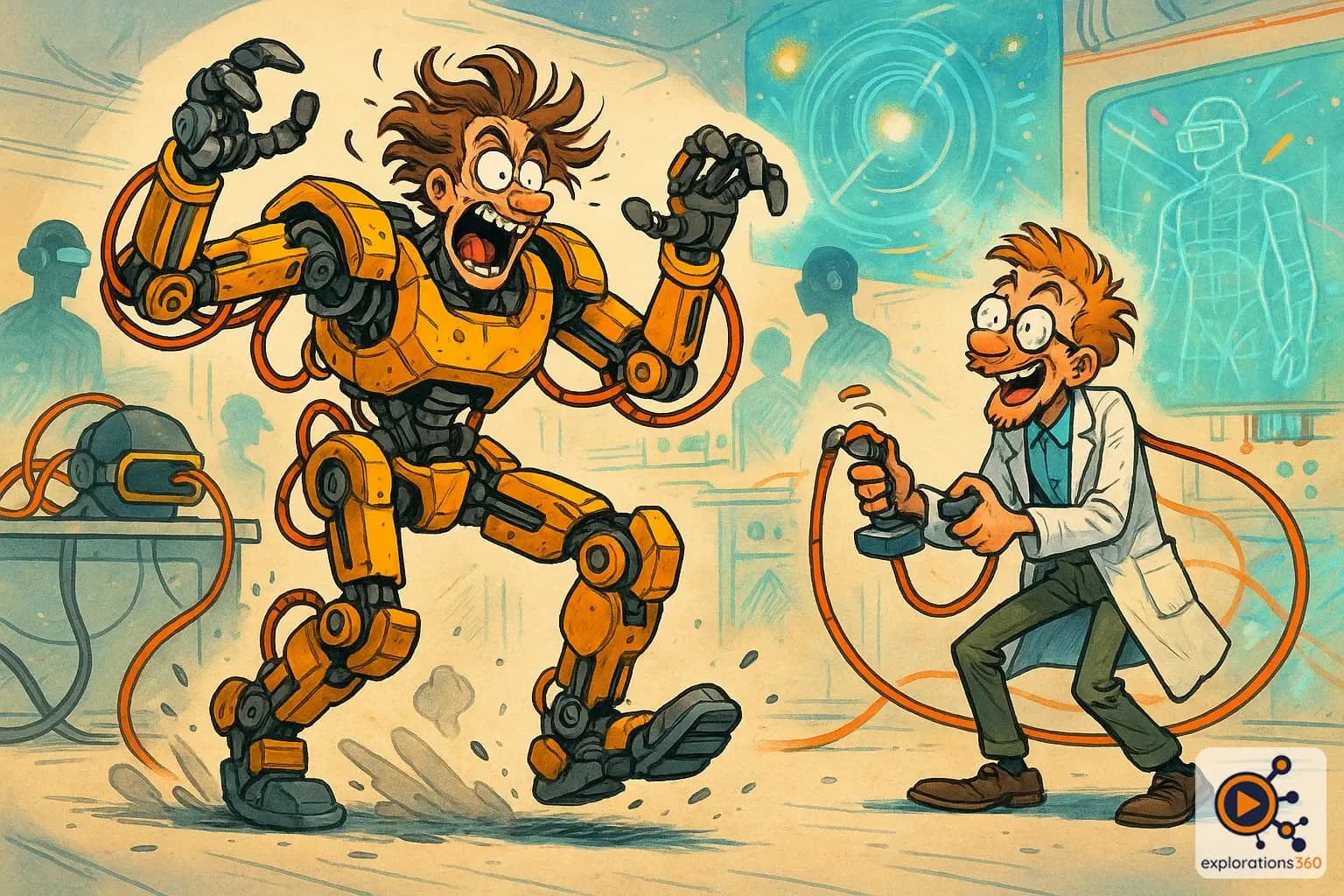
A mechanical structure worn on the body to amplify strength or assist movements.
Real-world example
The Iron Man suit, or an exoskeleton that assists construction workers.
Practical applications
- Force feedback in VR: physical resistance to virtual movements
- Rehabilitation: assisting and guiding patient movements
- Industry: reducing fatigue and musculoskeletal disorders for workers
- Full-body haptics: sensations across the entire body during immersion
Types of exoskeletons
Industrial assistance exoskeletons
- Reduce load on the back and shoulders
- Passive (springs) or active (motors)
- For material handling and overhead work
Example: Hilti and Comau exoskeletons for the construction industry
VR haptic exoskeletons
- Block or resist user movements
- Simulate contact with solid objects
- Used for simulation and training
Example: Arm exoskeletons for virtual surgery
Rehabilitation exoskeletons
- Guide patient movements
- Coupled with motivating VR environments
- For post-stroke recovery, paraplegia rehabilitation
Example: Lokomat for gait rehabilitation
VR scenario
A paraplegic patient trains to walk in an exoskeleton coupled with a VR environment. They "walk" through a virtual park, making rehabilitation more engaging. The exoskeleton guides their legs while the VR motivates the effort.
Why it matters in professional VR
- The exoskeleton is the ultimate level of haptic feedback: physically blocking movement
- VR and robotics convergence: high-impact medical and industrial applications
- High cost but highly targeted use cases with demonstrable ROI