

Explanation
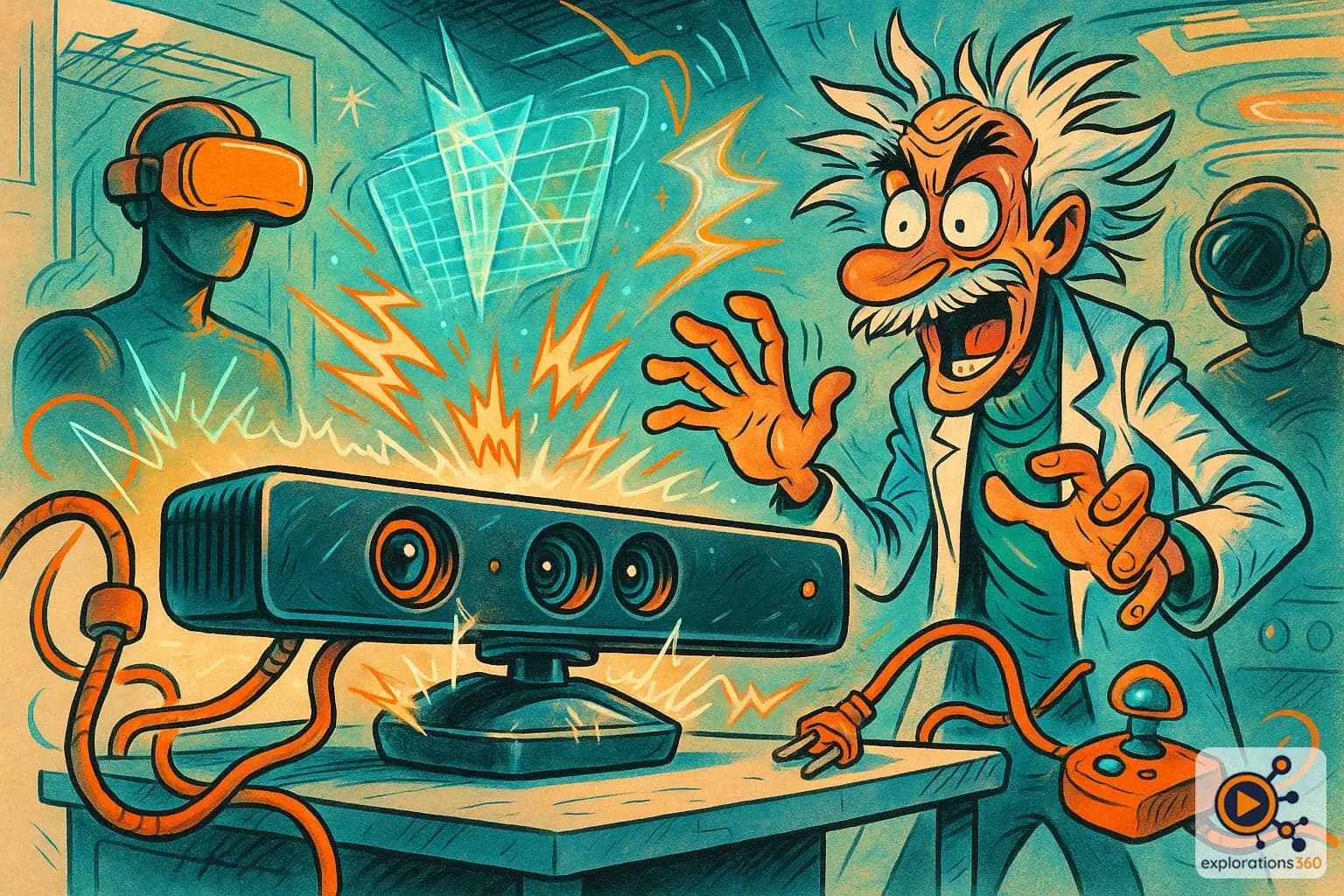
A former gesture-detection peripheral and precursor to modern hand tracking. Developed by Microsoft for Xbox, Kinect introduced affordable depth cameras and markerless body tracking to the mainstream, paving the way for the inside-out tracking and hand tracking found in today's VR headsets.
Real-world example
The Xbox device that captured your full body to let you control games with gestures -- no controller needed.
Practical applications
- Full-body motion capture without markers
- 3D scanning of people and environments
- Gesture-based interaction without a controller
- Research and natural interface prototyping
Kinect's technological legacy
Technologies introduced
- Affordable real-time depth camera
- Automatic body skeletonization (body tracking)
- Consumer-grade gesture recognition
- SDK accessible to independent developers
Example: The Azure Kinect is still used today in professional volumetric capture
Influence on modern VR
- Inside-out tracking inspired by Kinect cameras
- Quest hand tracking evolved from this research
- Full-body tracking without a bodysuit
- Democratization of computer vision
Example: Meta Quest hand tracking descends directly from Kinect research
VR scenario
In 2012, a researcher hacked a Kinect to do body tracking in VR -- revolutionary at the time. Today, the Azure Kinect captures actor performances in volumetric video for VR experiences. That little $150 Xbox sensor launched a revolution that benefits every modern headset.
Why it matters in professional VR
- Pioneer: proved that markerless tracking was viable and affordable
- Democratization: made it accessible to independent developers
- R&D: used in thousands of VR/AR research projects
- Legacy: Kinect techniques are now embedded in every Quest headset