

Explanation
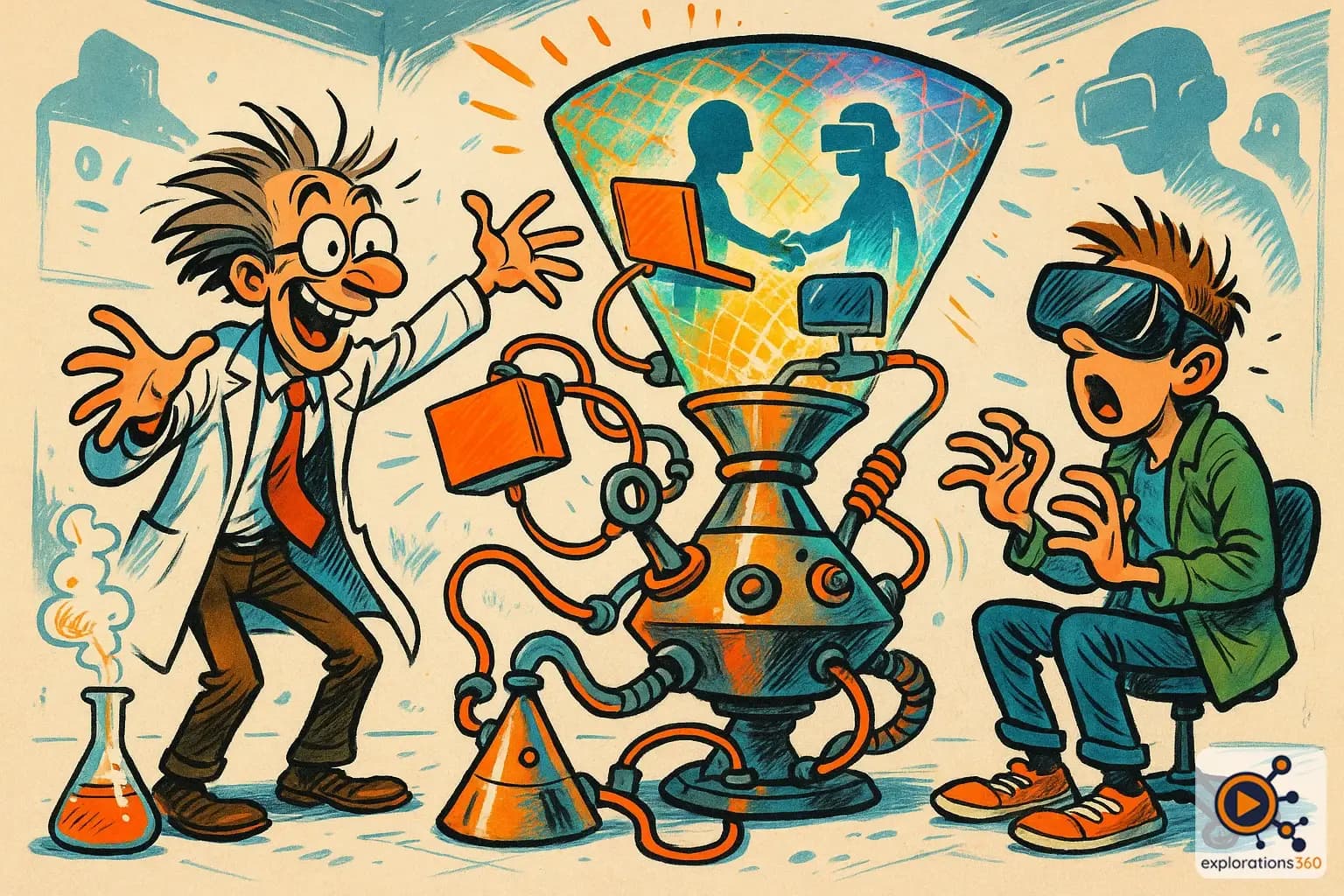
In UX and VR design, a metaphor is an analogy drawn from the real world to make virtual interfaces and interactions intuitive. By mapping unfamiliar digital concepts onto familiar physical objects and behaviors, metaphors reduce the learning curve and enable immediate usability -- especially critical in VR where users have no keyboard or mouse to fall back on.
Real-world example
The "folder" icon on your computer that looks like a real paper folder -- that's a metaphor.
Practical applications
- UX design: making virtual interfaces intuitive by leveraging familiarity
- Learning transfer: applying real-world knowledge to virtual interactions
- Affordance: suggesting an object's use through its shape
- Onboarding: easing first-time users into a VR experience
Key metaphors in VR
Navigation metaphors
- Teleportation: point and appear (instead of actually walking)
- Portals: doors to other spaces
- World miniature: a manipulable map for moving around
- Bird's eye view: flying over for an overview
Example: The teleportation ray in most VR games
Interaction metaphors
- Virtual desktop: windows, folders, trash can
- Realistic tools: a virtual screwdriver that works like a real one
- Hand laser: a ray from the hand for distant pointing
- Palette menus: a painter's palette for options
Example: Radial menus that mimic a natural gesture wheel
Spatial metaphors
- Virtual rooms: organizing information as physical spaces
- Shelves: visually arranging objects and files
- Spatial timeline: time as a path to walk along
- Functional zones: workshop, library, lounge
Example: A virtual library where books represent documents
VR scenario
In a VR fire safety training application, the "assembly point" metaphor is preserved: a familiar green sign indicates where to go. The virtual fire extinguisher works exactly like the real one (pull the pin, aim, squeeze). These metaphors enable immediate transfer to the real-world situation.
Why it matters in professional VR
- Intuitiveness: reducing the learning curve by leveraging the familiar
- Transfer: skills learned in VR apply directly to reality
- Universality: culturally shared metaphors facilitate adoption
- Innovation: sometimes entirely new metaphors must be invented for VR