

Explanation
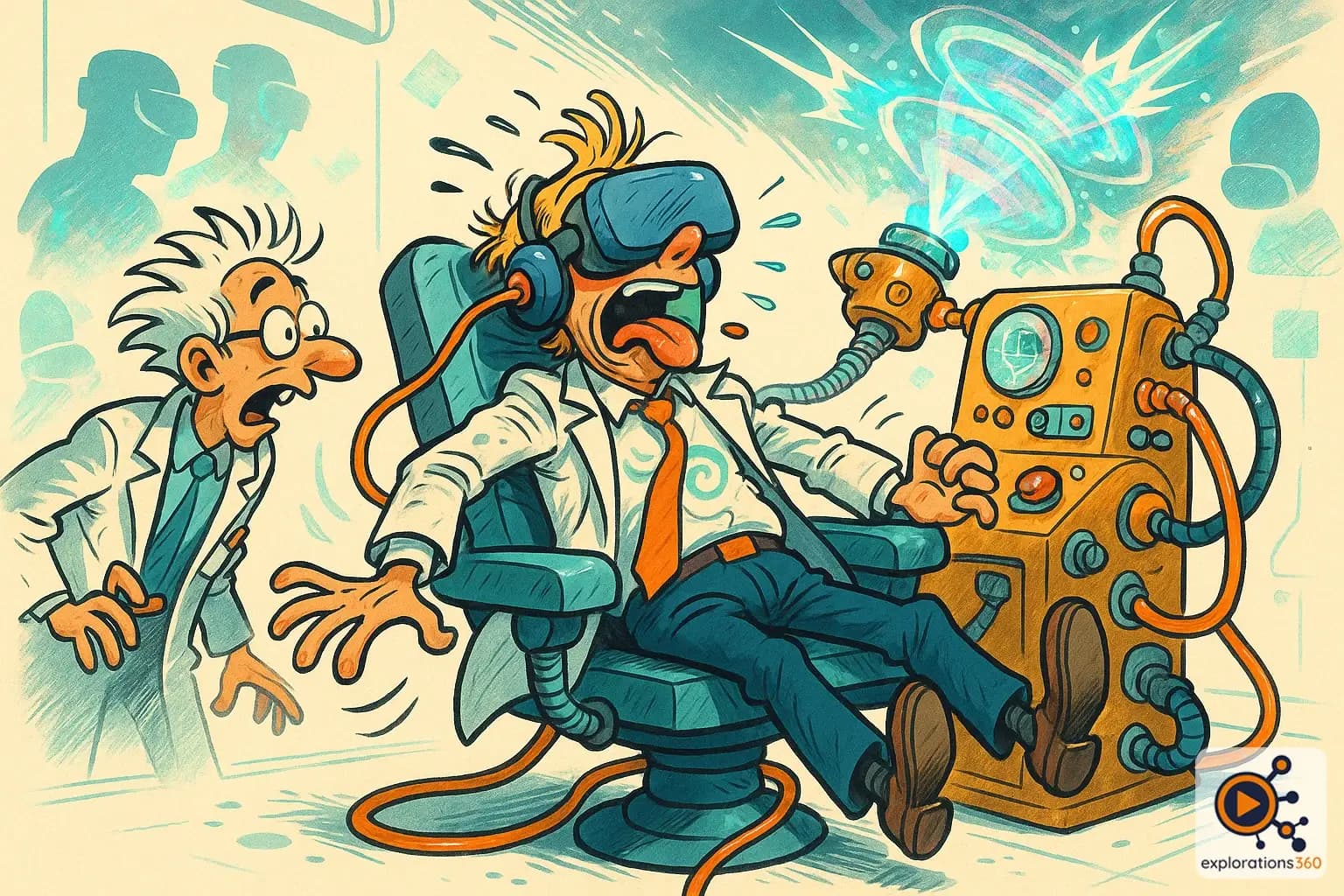
VR motion sickness (cybersickness) occurs when the visual motion seen in the headset conflicts with the physical motion (or lack thereof) felt by the inner ear. This sensory mismatch triggers nausea, dizziness, sweating, and general discomfort.
Real-world example
Riding a virtual roller coaster while sitting still at your desk: your eyes see rapid movement, but your body feels stationary — your brain interprets this conflict as potential poisoning and triggers nausea.
Practical applications
- Content design: applying comfort guidelines to minimize sickness triggers
- Hardware evaluation: comparing headsets on latency, refresh rate, and tracking quality
- User onboarding: gradually introducing VR to sensitive users with gentle experiences first
- Research: studying individual susceptibility and developing mitigation techniques
Causes and solutions
Main causes
- Latency between head movement and display update (> 20ms)
- Low refresh rate (< 72 Hz perceived as stuttering)
- Artificial locomotion (joystick movement without physical walking)
- Poor tracking causing visual "drift" or instability
Example: A VR game using smooth joystick locomotion at 60 Hz on an old headset — a recipe for nausea
Mitigation strategies
- Teleportation-based movement instead of smooth locomotion
- High refresh rate (90 Hz+) and low latency
- Fixed reference points (virtual nose, cockpit frame)
- Short sessions with gradual exposure for new users
Example: A VR training app uses teleportation movement and 90 Hz rendering, achieving near-zero sickness reports
VR scenario
A VR training platform for construction workers initially caused 30% of users to report discomfort. After switching from smooth locomotion to teleportation, adding a subtle static grid overlay during movement, and enforcing 90 Hz rendering, sickness reports dropped to under 5%.
Why it matters in professional VR
- Motion sickness is the #1 barrier to VR adoption — if users feel sick, they won't come back
- Content creators must understand and apply comfort best practices from the design phase
- Hardware improvements (higher refresh rates, better tracking, lower latency) are steadily reducing the problem