

Explanation
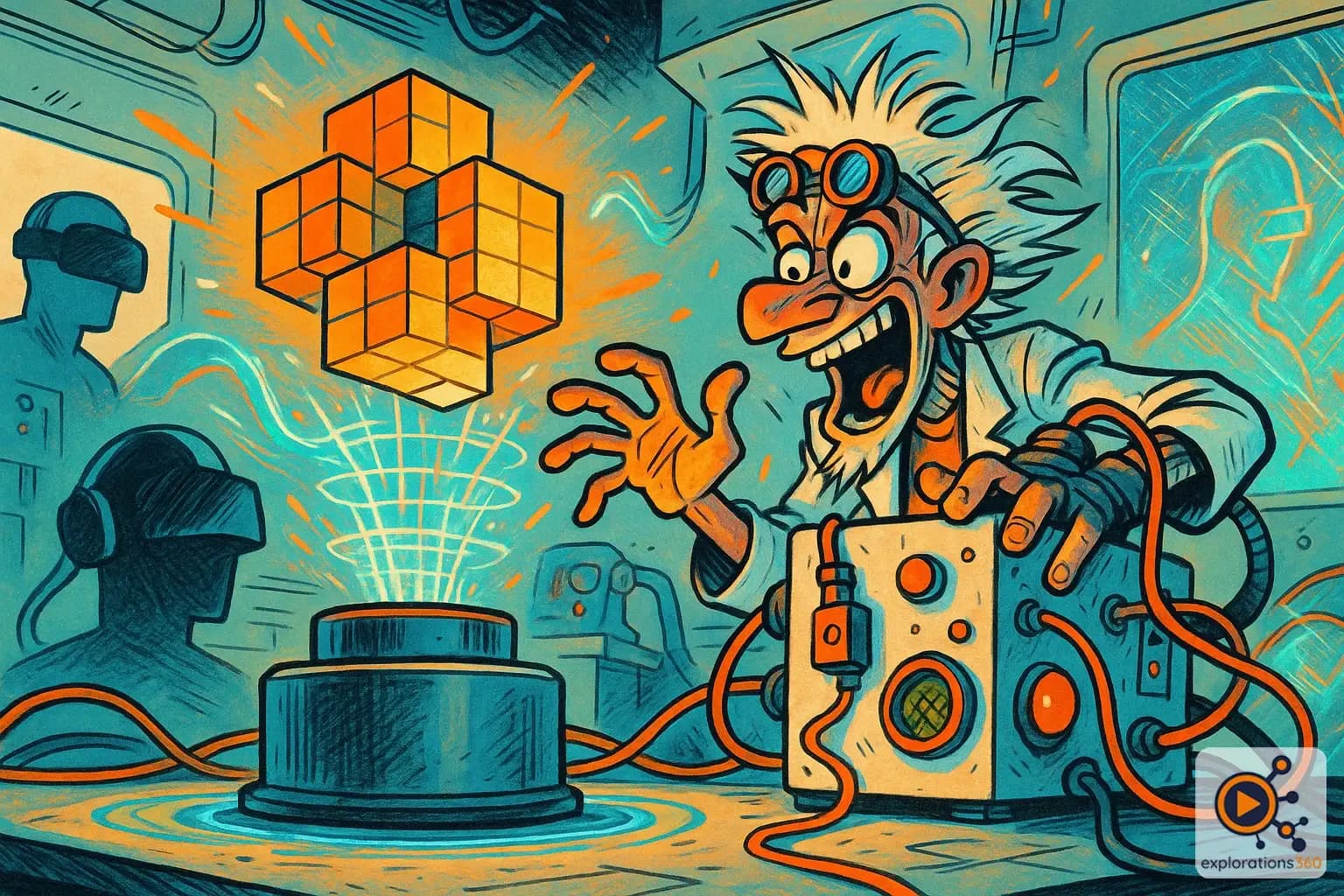
The smallest element of a three-dimensional image, the 3D equivalent of a pixel.
Real-world example
The small cubes in Minecraft — each cube is a voxel.
Practical applications
- Medical imaging: MRI and CT scanners produce voxel data
- Construction games: Minecraft and Roblox use voxel worlds
- Simulation: fluids, smoke, and destruction modeled using voxels
- 3D scanning: point clouds are converted into voxels
Voxels vs polygons
Voxel representation
- The world is a 3D grid of cubes
- Each cube holds a value (solid/empty, color, material)
- Conceptually simple
- Memory-intensive for fine details
Example: A brain in an MRI: each voxel indicates tissue density
Polygonal representation
- Surfaces defined by triangles
- More efficient for smooth shapes
- Standard in video games and VR
- Less intuitive for certain operations
Example: A VR game character modeled in triangles
Hybrid approaches
- Voxels converted to polygons for display
- Marching cubes: surface extraction from voxels
- SDF (Signed Distance Fields): implicit representation
- Each technique has its strengths
Example: A Minecraft terrain displayed as polygons but stored as voxels
VR scenario
A doctor examines a brain scan in VR. The original data consists of voxels: a 3D grid where each small cube represents a point of the brain with its density. The software converts these voxels into a manipulable 3D surface. The doctor can "cut" the brain at any point and view the cross-section — impossible with a purely polygonal model.
Why it matters in professional VR
- Volumetric data: medical scanners produce voxels, not surfaces
- Physical simulation: destruction and fluids are more natural in voxels
- Creativity: voxel games let you modify everything cube by cube
- Conversion: understanding how to go from voxels to real-time rendering