
The Saint-Martin Nature Reserve is now a pilot site for environmental awareness through the use of virtual reality. This innovative approach was born out of a concrete need: to make fragile ecosystems that are essential to island life visible and understandable. Through an interview with Vincent Oliva, head of the Environmental Education department, we discover how the Saint Martin National Nature Reserve uses VR as a powerful, inclusive, and sustainable educational tool to reach children, teachers, and the general public.
Reserve Saint-Martin: background and origin of the VR project
Between 2020 and 2021, the Saint Martin Reserve received funding from a private company to purchase virtual reality headsets. The goal was clear: to raise awareness among young people and the local population about environmental protection. On an island like Saint Martin, marine ecosystems play a vital role, but often remain unknown because they are difficult to access.
Coral reefs, mangroves, and seagrass beds surround the island and form a natural barrier against storms and cyclones. After Hurricane Irma, it became essential to explain their protective role in concrete terms. Virtual reality was identified as the ideal tool to show, safely and without constraints, what cannot always be observed in the field.
Why the Reserve Saint-Martin focuses on children
Changing practices through education
Through the actions carried out by the Saint-Martin Reserve, one thing has become clear: certain fishing practices and ways of exploiting the environment are inherited from ancient traditions. Changing these behaviors among adults is proving to be complex. On the other hand, children represent a tremendous vehicle for change.
Young audiences ask questions, challenge their parents, and become natural advocates for raising awareness. After several years of working with schools, the reserve's teams regularly hear striking feedback: children talk about what they have seen in VR at home and encourage adults to think differently.
Children as actors in the community
This dynamic transforms the relationship between the reserve and the population. Children are no longer mere visitors, but true ambassadors for ecosystem protection. Their curiosity and ability to internalize messages reinforce the long-term impact of educational initiatives.
Virtual reality, a key tool for the Saint-Martin Reserve
Making inaccessible ecosystems accessible
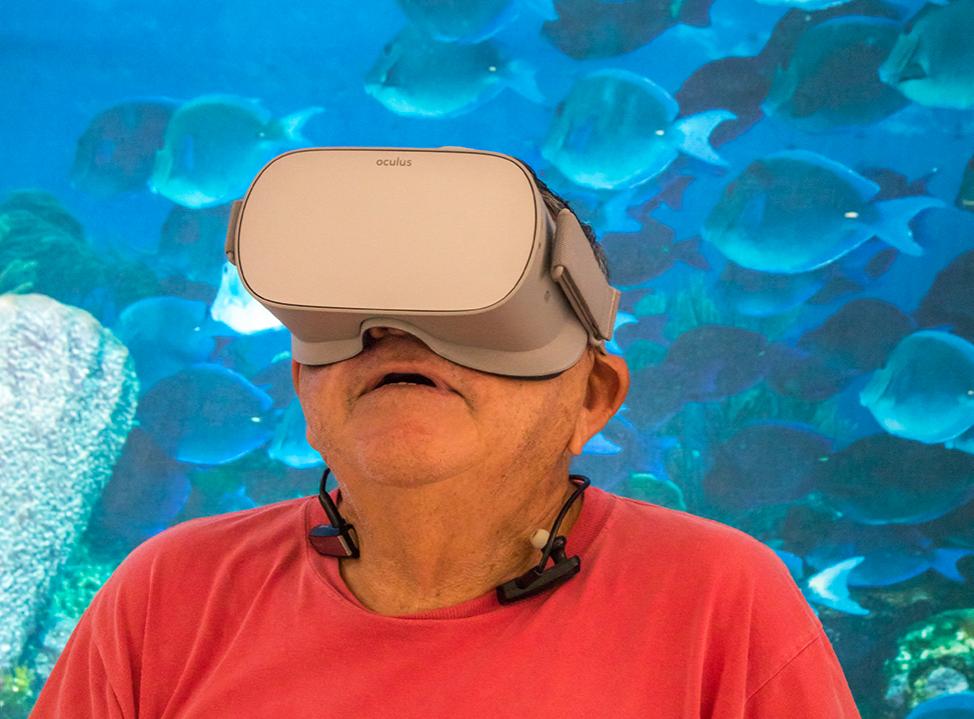
Thanks to VR headsets, the Saint-Martin Reserve immerses audiences in the heart of coral reefs without the need to actually dive. This immersion is essential, as scuba diving remains expensive and inaccessible to some people for health or disability reasons.
Virtual reality removes these barriers. Everyone can enjoy the same experience, in the same place, without exclusion. This equal access fosters understanding and empathy for fragile natural environments.
A strong and lasting emotional impact
According to Vincent Oliva, once children have seen these ecosystems through immersion, their perspective changes profoundly. VR does not simply convey information: it provokes emotion and awareness. It is this emotional dimension that makes the tool indispensable for awareness-raising initiatives.
Today, nearly 90% of VR use takes place in schools, with the rest occurring at events such as Nature Day or Science Day. The goal is not financial, but educational: to raise awareness effectively and sustainably.
Reserve Saint-Martin and future prospects in virtual reality
An immersive project for the reserve's 30th anniversary
In 2028, the Saint-Martin Reserve will celebrate its 30th anniversary. To mark the occasion, an ambitious project is in the works: the creation of an immersive space that will be accessible for several months. Visitors will be able to discover the history of the reserve, the evolution of ecosystems, and their protective role through 360° experiences.
This system will be based on an immersive platform incorporating advanced features such as interactive quizzes, educational stopping points, and avatars. The aim is to make the visit active and engaging for both children and adults.
When students create their own content
The platform will also enable students to become content creators: 360° videos, educational scenarios, interactive questions, and even educational escape games. This participatory approach reinforces ownership of environmental issues.
Through these projects, explorations360 supports educators in implementing simple, effective VR tools tailored to the needs of the field. The idea is clear: children are no longer just spectators, they become actors in raising awareness and protecting their territory.
Powerful testimonials about the Saint-Martin Reserve
"I can't do without this tool anymore."
"Virtual reality allows us to take audiences to inaccessible ecosystems, without exclusion."
"Once they have seen these environments firsthand, their perspective changes."
"It is children who will change adult practices."
Link: VR exhibition nature reserve